Start my new year with some pancakes and a trip to the Entrance!
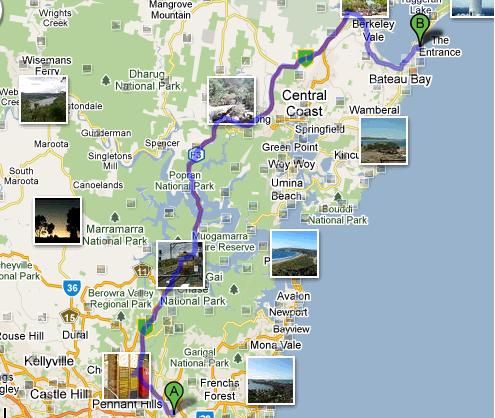
Yes, it's very early in the morning at 4:30 am, I'm learning to prepare pancakes for the family. We are leaving for a fishing trip to the Entrance from Sydney at 7:00 am. I've got the recipe from the YouTube. Here is the video clip from the YouTube:
3 large bowls
A whisk
1 1/2 cup of unbleached all-purpose flour
3/4 tsp. salt
2 tsp. of baking powder
2 tbsp. of sugar
2 large eggs
A hand mixer
1 1/4 c. of milk
3 tbsp. of melted butter or vegetable oil
Additional vegetable oil or cooking spray
A spatula
A greased 1/3-cup measure
A cookie sheet
A griddle or a heavy nonstick pan
Malted milk powder
Frozen blueberries
More butter
Maple syrup
Various toppings
Step 1: Whisk the dry ingredients
In one bowl, mix the dry ingredients thoroughly together with a whisk so they're fully incorporated into each other. Break up any lumps.
Tip: Diner pancakes are often made with malted milk powder instead of sugar. Using malt in your recipe will impart that pancake-house flavor.
Step 2: Separate the eggs
Separate the eggs into the other two bowls. Whip the whites with a hand mixer until they form stiff peaks and set aside.
Step 3: Mix the wet ingredients
Add the milk to the egg yolks and beat them together with the mixer until they're bubbly. Then, mix in the oil or butter.
Step 4: Add dry to wet
Add the dry ingredients to the egg yolk mixture, and whisk them together very gently until they're just incorporated. Don't mix too much; overworked batter results in tough, dense pancakes. Fold in the egg whites in two additions, and let the batter rest for 15 to 20 minutes.
Step 5: Heat your pan
Heat your pan or griddle to about 350 degrees, and lightly coat the surface with cooking spray or vegetable oil. Test the temperature by sprinkling a droplet of water onto the surface; if it's hot enough, the water will skitter and evaporate.
Tip: Don't use butter to grease your pan, unless it's clarified butter. Regular butter will burn.
Step 6: Make a trial pancake
Test your temperature by making a trial pancake. Use your 1/3-cup measure to gather a scoop of batter & pour it onto your pan or griddle. When the edges have browned & bubbles appear, flip the pancake, & cook the other side until it's golden brown. Don't press down on the pancake; it won't help it cook faster, and it'll crush the light texture.
Tip: To make blueberry pancakes, scatter a handful of frozen blueberries into the batter as soon as you pour it onto the griddle.
Step 7: Cook your pancakes
When you're satisfied that you've got the right temperature, use your 1/3-cup measure to pour on as many helpings of batter as you can comfortably fit on the griddle. There should be a bit of space between them, so that they don't overlap or touch when you flip them.
Step 8: Keep them warm
Pancakes should be served as soon as they're cooked through. If you're whipping up a big batch, don't let your cooked cakes get cold while the new ones are just hitting the griddle. Instead, lay the pancakes on a cookie sheet. Make sure not to overlap or stack them, and place them in a just-warm oven until you're ready to serve.
Step 9: Serve and enjoy
Serve your pancakes with traditional sides like butter and maple syrup, but don't be afraid to experiment! Give whipped cream, jams or jellies, peanut butter, sliced fruit, and even melted chocolate a try!
I haven't updated my blog for nearly a month because it takes me all my time and energy to start my new live in Sydney.
Having stayed at a service apartment in Hornsby for more than a week, we finally rent an apartment to settle in North Sydney. It is quite a spacious unit. This is the view that we can see from our unit.
Benjamin started school this week. He loves his new school and enjoys going there. Carol has just passed her English Test, and will attend school shortly.
As for us, we are still receiving our furniture and unpacking boxes from Hong Kong. We bought a new car last week. I think it will still take sometime to really get settled so I can have more time to update my blog more often.
Kuala Lumpur (translated as: "muddy confluence," "muddy estuary," and "muddy city"; pronounced /ˈkwɑːləlʊmˈpʊər/ in English;[3]Malay [kwɑlɑlʊmpʊ], locally [kwɑləlʊmpɔ] or even [kɔlɔmpɔ], and often abbreviated as K.L.) is the capital and largest city of Malaysia. The city proper, making up an area of 244 km (94 sq mi), has an estimated population of 1.6 million in 2006. Greater Kuala Lumpur, also known as the Klang Valley, is an urban agglomeration of 7.2 million. It is the fastest growing metropolitan region in the country, in terms of population as well as economy.
Kuala Lumpur is a very modern city with an efficient and inexpensive network of public transport comprising trains and light rail. The biggest attractions in the city – literally – are the Petronas Towers, the tallest twin towers in the world at 88 floors. The connecting bridge between the towers provides unsurpassed views of the city and tours to the skybridge are a popular activity for tourists. Kuala Lumpur Tower – Menara Kuala Lumpur – also has an observation deck from which a 360-degree view of the city can be had without obstruction.
3 Parks - Water Park, Amusement Park & Wildlife Park
SUNWAY LAGOON STANDS AS MALAYSIA'S AND ASIA'S PREMIER MULTI-PARK DESTINATION
Officially opened on April 29, 1993 by Prime Minister YAB Dato' Seri Dr Mahathir Mohamad, Sunway Lagoon is Malaysia's Premier Theme Park and has become the most visited tourist destination in the country.
Sunway Lagoon is strategically located in the township of Bandar Sunway in Petaling Jaya. Spanning 80 acres, the Lagoon draws fun seekers from all over with its reputation as a fascinating land of fun and excitement.
Sunway Lagoon is separated into 3 major themed lands, each boasting their own exciting attractions. Find entertainment, adventure and excitement all in place. A place where you will bring back more than just memories.
Sunway Lagoon, being part of Malaysia's first fully-integrated themed resort - Sunway Lagoon Resort, offers visitors the conveniece of a 5-star hotel, a grand shopping mall right next door and other ultra-modern facilities.
_________________________________________________________________
Dubbed ‘City of Entertainment’, Genting Highlands is a well-rounded, one-stop holiday destination situated some 2000 metres above sea level.
Founded in 1965, this multi-award-winning highland resort is highly accessible from the city centre; it is only about an hour’s drive from Kuala Lumpur. Throughout the years, Genting Highlands with its cool mountain climate remains a firm favourite amongst both Malaysians and foreigners.
With a multitude of attractions which include theme parks, a casino, a shopping mall, a horse ranch, an 18-hole golf course and a world-class entertainment centre, this popular resort promises a good time for everyone regardless of whether you’re here with the whole family or with friends.
Also located within its grounds are a superb collection of hotels so that visitors never have to leave the area if they don’t want to! ______________________________________________________
Lately, I've received the following email message. I reckon it a very interesting IQ question. See if you can get the answer. The answer can be read at the end. Try not to peek...
--
I am sending this only to my smart friends.
See if you can figure out what these words have in common.
1 Banana
2 Dresser
3 Grammar
4 Potato
5 Revive
6 Uneven
7 Assess
Are you peeking or have you already given up?
Give it another try. Look at each word carefully.
(You'll kick yourself when you discover the answer)
This Is Cool.
Answer: No, it is not that they all have at least 2 double letters.
Answer:
In all of the words listed, if you take the first letter, place it at the end of the word, and then spell the word backwards, it will be the same word..
Did you figure it out? No? Then send it to more people and stump them as well. Then, you'll feel better, too.
This is Matt. He quit his job to dance around the world. We support Matt's bold move and like him so much we sent him on a second trip. Check out all the places he traveled to this time around, and see exclusive outtakes footage that was too ridiculous to make the final cut. And, be sure to keep an eye out for more to come from Matt. ">
He (God) turns our mourning into dancing! (Ps 30:11)
Praise His name with dancing! (Ps 149:3)
Praise Him with timbral and dancing! (Ps 150:4) ~ should be timbale, eh?
There is a time to mourn ... a time to dance! (Eccles 3:4)
Lately, I've been very busy clearing clutter and reorganizing the home.
The following is a look at six ways to clear clutter :
Define spaces that need to be cleared of clutter: Make a list of every drawer, closet, table top, nook, and cranny that needs to be cleared of clutter. You can go room to room evaluating your need to reclaim your space, and get rid of stuff. Once your list is completed, you have a plan for how you are going to clear your home of clutter, and make it a stress and clutter free place. Start at the top, and work your way down.
10 minutes a day: give yourself ten minutes a day where you will clear clutter. In no time at all your entire home will be clutter free. Start with the rooms you spend the most time in, and work your way into the lesser used rooms. You will find that ten minutes of sorting through clutter can make a huge difference in how your home looks and feels. It can help to make a list of what needs to be done.
Multi-task to clear clutter: Clearing clutter is not ever on people's top priority list, as it is not a fun things to do, but you can make time for it by multi-tasking. As you talk to your parent on the phone, try organizing and clearing off a counter top or desktop. As you wait for cookies to come out of the over, clear the clutter off the top of your fridge, or counters. While you do things that do not require your hands, such as talking on the phone, clear clutter. It may only be a few minutes of time, but that can add up really fast.
Decorate and design your home: If your home is well put together, you are less likely to allow clutter to accumulate. So, take special care with each room in your home. Select the items that go in it, and the placement, colors, design, and decoration to make it as appealing a space as possible. If you do this, you will not want to see areas get cluttered, and thus you will make bigger efforts to remove clutter.
Reclaim your space: Find spaces that are generally cluttered that you would like to reclaim, and make it your goal. You can make piles of things that go elsewhere, should be thrown out, donated, etc. When you are finished with a space, take a moment to appreciate your handiwork, and revel in the pleasure of having a clutter free area. It really can feel wonderful and be extremely motivating to clear clutter out of other spaces.
Recycle, donate, sell: When clearing clutter, make this your mantra. If you go at it with the mindset of recycle what needs recycling, sell what you can, and donate the rest, chances are you will stay on top of the clutter, and be more eager to get through it. Half the battle with clearing clutter is not having repeat occurrences.
The essence of effective language learning is to learn to understand and to add "life" to your learning.
(John 6:63 ) The Spirit gives life; the flesh counts for nothing. The words I have spoken to you are spirit and they are life.
(Proverbs 16:22) Understanding is a fountain of life to those who have it, but folly brings punishment to fools.
What does adding “life” to learning means ?
It means the process learning language involves not only the language items but also the interactive process of: social, cultural, intellectual, and life enhancement.
John 6:63 The Spirit gives life; the flesh counts for nothing. The words I have spoken to you are spirit and they are life.
Impact
Good teaching and learning should have a meaningful impact on individual life.
Here are the 7 ways to enhance language learning:
Learn by listening: Make use of the English television or radio news to learn English so to better understand the world around you.
Learn by reading: Read news in English newspaper at least twice a week. Learn the titles of the news. They are windows showing you the "life" around.
Learn by incorporating learning resources into daily life: Read and study English daily. read and/or reply English e-mail messages. Search for and use learning resources on the Internet.
Learn by using vocabulary in phrases: Keep a note of phrases you find useful to develop your language or personal skills
Learn by repeating: Repeat and study the phrases that is meaningful to you.
Learn by memorizing: Know the styles of learning that will work for you. For example, you may need to write an expression several times before you can remember it; you may need to read aloud to memorize ideas or information.
Learn by writing and sharing ideas:Talk to your friends in English. Keep a record of your learning by writing blog messages.
Share with us how you add "life" into your learning!
Lee Aundra Temescu writes in an article "20 Things You Didn't Know About Death" #5 "The trigger for death, in all cases, is lack of oxygen. Its decline may prompt muscle spasms, or the 'agonal phase,' from the Greek word agon, or contest."
Symptoms of possible oxygen deficiency:
overall body weakness
fatigue
circulation problems
poor digestion
muscle aches and pains
dizziness
depression
memory loss
irrational behavior
irritability
acid stomach
lung problems
increased unhealthy bacteria, germs, viruses and parasites
almost any illness is created or worsened by lowered oxygen supply.
Oxygen (O2) plus glucose (C6H12O6) through BMR yields energy in the form of high energy phosphate bonds (especially ATP, the primary energy unit of the human body) plus water (H2O) which dissolves carbon dioxide (CO2) and facilitates the hydrolysis of energy yielding phosphate bonds. Preliminary research demonstrates that ATP may be an analog to one aspect of what the Chinese call "Qi", the Oriental Indians call "Prana", The French Elan Vital, The Greeks pneuma, the vital force or life energy.
Oxygen makes up almost 50% of the earth's crust by weight, 42% of all healthy vegetation, 85% of seawater, 46% of igneous rocks, 47% of much of aerated dry soil.
A common factor in asthma, emphysema, bronchitis and the variations of COPD is insufficient oxygen to the blood.
"Insufficient oxygen in our cells causes pain to be experienced more acutely than when oxygen supplies are ample" Dr. Samuel C. West. The Golden Seven Plus 1. 7th printing. April 1998
The development of cancerous cells is one major consequence of severe oxygen starvation.
Oxygen shortage in the human body has been linked to every major illness category including heart conditions, cancer, digestion and elimination problems, respiratory disease, inflamed, swollen and aching joints, sinus problems, yeast infections and even sexual dysfunction. Fresh live foods and rain water contain oxygen. Cooked foods and stagnant water has much less oxygen. Oxygen is our primary source of energy. It displaces harmful free radicals, neutralizes environmental toxins and destroys anaerobic (the inability to live in oxygen rich environments) infectious bacteria, parasites, microbes and viruses.
It is the main energy source for our brain function. It calms the mind and stabilizes the nervous system. Without oxygen we cannot absorb important vitamins, minerals, and other nutrients our body needs. When our cells lack oxygen they weaken and die. Without oxygen, nothing works very well or at all..
More indicators of possible low oxygen levels in the body are muscle aches; forgetfulness; heart palpitations; circulation or digestive problems; damaged cell growth; excessive amounts of colds and infections.
The American Heart Association states that over 1.5 million people die per year from heart conditions and that 70% of our population has some evidence of heart condition. All heart attacks come down to the hard working heart muscle’s failure to receive adequate supplies of oxygen. Of course maintaining one’s arteries and capillaries for easy blood passage is indispensable to optimal health but the fastest way to get oxygen right now is to breathe.
Hypoxia, or oxygen starvation, over-stimulates the sympathetic nervous system causing heart rate increases and invites eventual cardiac troubles. The heart must work harder to replace get the oxygen it needs and eventually it will collapse.
Oxygen depletion weakens our immune system, which leads to viral infections, damaged cells, growths, inflamed joins, serious heart and circulatory problems, toxic buildup in blood and premature aging. Low oxygen allows damaged cells to multiply and form growths in our bodies because our cells are oxygen deficient. If the cells in our bodies are rich in oxygen, mutated cells are less able to reproduce.
Your lungs will deteriorate 9-25% per decade (Framingham study) unless you do something to maintain them . Exercise is mandatory. Excessive stress in exercising can actually cause breathing blocks that invite inadequate levels of oxygen. The more we tighten up these “accessory” breathing muscles the more we cause the alveoli (where the oxygen goes into the blood stream) in our lungs to begin to clog up with waste products. This will impede the body’s ability to absorb oxygen and we slowly suffocate or our life span shortens.
As our cells grow older they lose their ability to carry oxygen. As the liver ages it robs increasing amounts of oxygen reserves for detoxification often leaving the other body systems with an oxygen shortage. When needed, the cells send signals to send more oxygen. Our brains need it most so when the body is in short supply our brains suffer the consequences.
Oxygen causes oxidation which is the converting of nutrients into energy. This oxidation also helps eliminate toxins and waste. The greatest threat to oxygen intake is the deterioration our breathing system. Next comes our exercise and nutrition, and then the environment. Of course if you are in a highly toxic present time breathing environment you will want to make it a priority above all others.
A common misconception is that 100 years or more, atmospheric oxygen made up 30-40% of the air we breathe. This is simply not true. Researchers at the Scripps Institute tell me there is no atmospheric oxygen shortage. Water tests from 10,000 year old glaciers prove this out that the oxygen supply hasn’t changed much at all. A primary oxygen intake is the way we breathe. Next comes nutrition, then exercise, then, barring sever toxicity, your breathing environment. The rain forests are a significant supply of oxygen (about 10%) creating plant life but the oceans and their many forms of blue green algae are the major suppliers of the earth’s supply of oxygen. Polluting the seas is asking for rampant sickness and accelerated aging for everyone, including fish, whales and dolphins.
Junk and cooked foods deplete oxygen stores. I call them negative foods as they use up more oxygen then they give off. Processed sugar, white flour, hamburgers, French fries and pizza are major oxygen users. If you MUST eat this way you can offset some of the loss by eating pounds of raw, "blendered" fresh fruits and vegetables daily. Not portions.......POUNDS.
Both emotional and physical stress create very high oxygen loss. Most stress is partially or completely neutralized by any one of several key breathing exercises.
Contrary to many health professional's opinion, oxygen does not cause the body to relax. If it did then being in a hyperbaric oxygen chamber would put one into a deep sleep and it clearly does not. The manner in which the breath takes in the oxygen is what is critical in the relaxation process. How the autonomic nervous system is enervated sympathetically or Para sympathetically or combinations of both.
Oxygen is like gold.Oxygen is free but just like gold can be very hard to find. The most efficient and economical way to get enough oxygen is in the way we breathe.
That said, my advice is to learn to breathe better, eat more live enzyme, nutrient and oxygen-rich foods and exercise moderately without excessive straining, gasping or breath heaving.
Here are my list of priorities in my order of usual importance. You can change the order and create your own program from this list or choose from several programs listed at the end of this page.
[Troy] Once in a lifetime Means there's no second chance So I believe that you and me Should grab it while we can [Gabriella] Make it last forever And never give it back [Troy] It's our turn and I'm loving where we're at [Both] Because this moment's really all we have [Troy] Everyday Of our lives, [Gabriella] Wanna find you there, Wanna hold on tight [Troy] Gonna run [Both] While we're young And keep the faith [Troy] Everyday [Both] From right now, Gonna use our voices and scream out loud [Gabriella] Take my hand [Troy] Together we Will celebrate, [Gabriella] Celebrate [Both] Oh, everyday [Gabriella] They say that you should follow [Troy] And chase down what you dream, [Gabriella] But if you get lost and lose yourself [Troy] What does it really mean? [Gabriella] No matter where we're going, [Troy] It starts from where we are [Both] There's more to life when we listen to our hearts And because of you, I've got the strength to start Yeah, yeah, yeah! Everyday Of our lives, [Both] Wanna find you there, wanna hold on tight Gonna run While we're young And keep the faith. Everyday [Troy] From right now, [Both] Gonna use our voices and scream out loud Take my hand Together we Will celebrate, [Gabriella] Oh, everyday [Troy] We're taking it back, We're doing it here Together! [Gabriella] It's better like that, And stronger now Than ever! [Both] We're not gonna lose 'Cause we get to choose That's how it's gonna be! [Troy] Everyday Of our lives, [Gabriella] Wanna find you there, wanna hold on tight [Troy] Gonna run While we're young [Both] And keep the faith Keep the faith! [Troy and Gabriella, all] Everyday Of our lives, Wanna find you there, wanna hold on tight Gonna run While we're young And keep the faith Everyday From right now, Gonna use our voices and scream out loud Take my hand Together we Will celebrate, Everyday! Live every day! Everyday! Love everyday! Everyday! Live everyday! Everyday! Love everyday! Everyday! Everyday! Everyday! Everyday! Everyday! Everyday! Everyday. More lyrics: http://www.lyricsmode.com/lyrics/h/high_school_musical_2/#share
I've just read a very interesting article regarding the mnemonic technique for learning foreign words.
Read and enjoy!
How to Learn Foreign Words
Last Month I promised that I would tell you all about the Number System that I used for the 1998 World Memory Championships. However, I have been getting many questions about the application of Mnemonic techniques for learning a foreign language so this month I shall focus on that.
Now the best way to learn a language is to immerse yourself totally both in the culture and the language itself with native speakers who do not speak your own language. It is the quickest way to learn because that is how we learnt our mother tongue. But that is not always possible so we either take a class at school or college, or we buy one of the many home study courses available.
Whichever way we choose, the foundation of our success in the language of our choice will be a good solid vocabulary. Now when I cast my mind back to my school days I was never taught how to learn new foreign words other than by good old repetition. This can be effective if you are motivated enough but it does take time, is extremely boring and can be the factor that puts many people off from becoming proficient in a new language. You will be pleased to know that you can speed up the process significantly, make it fun and have more effective recall in a shorter space of time. So how do we do that?
Well before we get into any sophisticated mnemonic techniques when you learn new words, quite often their similarity to the equivalent word in your mother tongue will immediately give you the translation. For example if you are English and you are learning German, the word for Boat is Boot. If you are French and you are learning English, the English for lettre is letter. (For the remainder of this article I shall assume that your native tongue is English). Now the similarity may be in the way the word is pronounced (as in the Boat/Boot example), or it may be in the way the word is spelt (as in the lettre/letter example). It does not really matter as long as you identify the similarity and then use it to help you translate.
Jonathan Hancock, a former World Memory Champion, always remembers that in German, Hafen means harbour as his teacher told him to associate Hafen with haven because in rough weather, a harbour is a safe haven for ships. (Jonathan's book "Boost Your Mindpower" is reviewed this month in the book review section). Therefore, another way to remember a foreign word is to find some sort of relationship to the English word. Another example that Jonathan uses is the French translation of carpet which is tapir. He uses the link with tapestry to remember that translation.
With most words, there is no obvious link to the English translation, so we have to use our imagination and create one using mnemonics. As I have said before, the secrets of a super power memory are very important when using mnemonic techniques so just to remind you again here they are:
Synaesthesia/Sensuality
Movement
Association
Humour
Imagination
Number
Symbolism
Colour
Order and/or sequence
Positive images
Exaggeration.
Let us pick a word that we want to remember - I am going to choose Seife which in German means soap. Now when I hear the word Seife, the German pronunciation is very similar to the word siphon (a plastic tube that opens out at one end into V or U shape). In my imagination, I now need to associate an image of a siphon with an image of soap using the principles of a super power memory listed above.
I imagine an enormous siphon made of clear red plastic rolling around the rim of a bright blue bucket (I hear the sound of plastic rubbing on plastic) into which it has been placed. Another bucket hovers above the siphon and is pouring tonnes and tonnes of white soap powder into it (I hear the hiss of the powder as it falls into the rim of the siphon and see the tumbling stream of white particles). It is important to make the siphon and the soap the dominant images of the picture that I create otherwise I could confuse myself and translate Seife into bucket. A hose pipe is pouring gallons of water into the siphon so that loads and loads of soft white soap suds start overflowing from the siphon, engulfing the bucket and everything in the soap's path. I can even taste the soap as it covers everything. Eventually, all that I can see is the white soap suds and the large red siphon.
As I have discussed before, it is important to create strong, vivid images when I form these pictures. Equally important is that I practice the translation in my mind several times so that the link is strong. So when I hear the word Seife I think of siphon and immediately the image comes back to me and I see and taste the soap.
So to build up a strong vocabulary in your new language, you just create images using the technique I have described above. This process can be applied to nouns, adjectives and verbs. Why don't you try the following examples for yourself:
Leiter in German means Ladder (tip - you could feel lighter as you climb the ladder)
Livre in French means Book (tip - open your book and see pieces of liver on each page)
People in Spanish is Gente - pronounced hen'tay (tip - see a crowd of people dipping hens into large cups of tea)
Once you have created these images, a good idea to help build up and maintain your expanding vocabulary is to link each image at a location on a journey dedicated to learning your particular language. Jonathan Hancock advocates this method. Dominic O'Brien suggests that you pick a particular town that you know well and then link the images at appropriate places around that town. For example the image that you create for the French translation of book could be located at the library or in a book shop. You may want to pick specific parts of the town for different types of words for example all verbs could be located in the park. It does not really matter which technique you use, or whether you try combinations of each, just experiment with the options, find what works best for you and then use that method.
As you will discover when you learn other languages, you will have to consider the gender of the word. In German, nouns can be feminine, masculine or neuter. There are several ways of learning gender. For example, if you are male, you could involve yourself somehow in the image of all masculine words by taking part in the scene that you create. For feminine words you could imagine yourself as a spectator watching someone else (a female friend perhaps) taking part in the image. In my image I would see a woman holding the siphon because it is a feminine noun. You may wish to include an animal such as a pet dog in every image of a neuter noun. If you use Dominic O'Brien's technique of using a town to store your vocabulary, you may want to partition it so that every image south of the river is feminine or west of the High Street is for masculine words only. You will of course have to know your mental map of the town quite well.
To summarise the techniques for translation:
Is the translation obvious? If it is you don't need to use a mnemonic technique.
Can you find some logical relationship between the word and its translation? If so use that to help your translation.
Create a vivid picture relating an image of the English word with an image created by manipulating the foreign word using the principles of a super power memory.
Locate the image at a location on a dedicated journey or at an appropriate place in your town.
Manipulate the image to account for the gender of word by adding specific imagery or by locating it at an appropriate place on your journey or in your town.
Repeat the above for every word you wish to learn.
More examples can be found in Dominic O'Brien's book "How to Develop a Perfect Memory" reviewed in May 1998, or in Jonathan Hancock's book "Boost Your Mindpower", reviewed this month.
The process I have described does sound rather long winded but you will find that you will only have to spend 30 seconds at most to create and strengthen your images so that in an hour you could learn as many as 120 words! If you compare that to the time it takes to learn the same amount of words by repetition you will see how effective it is. It will only work if you try it and put in a bit of short term effort to get long term rewards. An important point to note is that the mnemonic is only a temporary crutch for you to rely on in the short term because as you become more proficient in the language (which will only come through continued use), you will "just know" that Seife means soap.
Writing can be seen as a process of expressing and conveying meaning. This is usually done in the way that can be easily understood by readers. In other words, when you write, try to show your readers the meaning of your text and tell them how your thinking journey is like.
You will also write according to the scope you specified in your introduction. A focus point is a must in any single paragraph of your writing. Besides, what always matter in a piece of writing is not only the content but also the conviction held by the writer. Reader will always get your message according to the conviction presented by the writer.
Let's read the following essay by a form-one student, with the title Chinese Food and Diet. Chinese Food and Diet
Chinese food is popular in the world. It is also good for a daily diet. Most Chinese dishes in a normal diet are nutritious and delicious.
Chinese food is nutritious because Chinese food includes vegetable, meat, tofu, and seafood. They are usually prepared in bite-sized pieces. There is usually a balance between meat and vegetable. Rice or noodle is the main source of food in a meal.
Chinese food is also delicious because it is prepared and cooked thoroughly with a variety of combination and ways. For example, in a normal meal, rice or noodle is accompanied with dishes of vegetable, meat, or fish. Steaming, stir frying, and boiling are the three main ways of cooking.
Being nutritious and delicious are the characteristics of Chinese food. No doubt, it becomes a popular food in the world. (137 words)
The writing is clear and easy to understand. The key words of the essay can be found in three words of the essay title: Chinese, food, and diet. Obviously, the writer has a positive view about Chinese food. He uses the three adjectives to summarise his conviction about Chinese food: popular, nutritious, and delicious. They also become the key words of the topic sentence in each paragraph. All the ideas arise from these three main adjectives. Thus, they help to focus the content on the theme of the short essay.
In term of organisation, the essay follows the features of the genre, i.e. the expository writing with an introduction, main body, and a conclusion at the end.
Of course, there are still rooms to improve the writing. For example, the writer didn't mention the relationship between Chinese food and daily diet. But with the limited time available, i.e. writing 100 - 150 words in 30 minutes. The writer has achieved quite a lot.