12/18/2008

Writing Task II for BA Students

Write a promotion leaflet to describe the IELTS Preparatory Course offered by Intelligent Institiute using the data above.

Better Job and Education Opportunities with IELTS Qualification
Intelligent Institute – The Intelligent Choice!

How important is IELTS?
IELTS is a world recognised English language testing system evaluating the proficiency of English as a second language in the areas of the four English skills – reading, writing, listening and speaking. The test is set to be the entrance requirement for overseas universities and a preferred qualification of the employers from local and international companies.

Why Intelligent Institute?
We are one of the top education institutes founded in 1996, with the best language courses and learning environment. All English teachers are native speakers. The campus is located next to MTR station and it is equipped with modern teaching facilities for interactive teaching and learning. Our number of students has increased by six-fold from 2003 to 2008. Our guaranteed teaching quality is reflected in student surveys, which indicates that over 90% of the students rated satisfactory to excellent for our English course last year.

Specialties of IELTS Preparatory Course
Our English teachers adopt an easy and approachable teaching style. To enhance learning results, you will study in a class of no more than 15 students. You will find that small class teaching will definitely improve English learning results. Furthermore, you will learn proven exam techniques, and the key to a successful test. The trianing will better prepare you and give you greater confidence in taking the tests.

Students’ sharing
A junior marketing assistant of an IT company, Ms Ho, highly commented, ‘I think small class teaching is very good for my learning.’
A student of a local university, Mr Cheng, said, ‘I found I drowned into the fun and engaging language classes and I improved my confidence in English. See, I got an A in the test!’

New referral programme of Intelligent Institute
A discount will be offered to you if you refer new students to the Institute. You can enjoy the first 5% discount for the first person you refer and up to 20% for the fourth referral or more. The person you refer will be offered a coupon valued at $100 from OnePage Bookshop.

Join Now
The tuition fee is now only $2,999. Application forms are available at Intelligent Institute, by e-mail at application@ii.edu.hk, by fax at 2786 5688 or by calling 2786 5677.

What are you waiting for? We fulfil More for You!

12/13/2008

Writing Task I for BA Students - Product Promotion

The State-Of-Art Pocket PC You Can’t Miss

Would you like to have a high-speed processing pocket PC? Hyper iPAQ 1950 must be your choice.

About the HBC Company
The HBC company is one of the leading producers of desktop computers and PC in the world.

High-speed PC Features

The Pocket PC is a slim and sleek personal computer that you can put in your handbag or pocket. This tiny but high-speed Simpson SC32442 Processor 200MHZ provides you with powerful memory of 96MB. It can also help you to organize the total memory of 96MB into 64MBROM and 32MB SDRAM.

Reliable and Stable PC Functions
The Hyper iPAQ PC incorporates the reliable and stable Windows Mobility 5.0 for Pocket PC Premium Edition, i.e. with both English and Traditional Chinese editions. You can trust on the high-speed Simpson Processor which is known for its reliability and stability. It is also compatible with the Window Media player.

Reasonable Price for a Quality Product

Now, with only $3,380, you will experience a joy of carrying the lightest PC. You will also experience excellent digital moments using the powerful memory. Most importantly, you will enjoy the unforgettable entertainment. So, get a HYPER iPAQ 1950 PC at any Hyper Shops and all department stores.

Enquiry Details
For further enquiry, you may send us an e-mail at pocketpc@hbc.com, contact us by fax at 2706 0088 or by calling 2786 5677.

It’s all now or never!

==================================

Complete the description of a product using the data below. Try to make use of a variety of adjectives, adverbs, action verbs to help promote this product to customers.

12/09/2008

Picture Description - Writing Hints

Dear students

I'd like to suggest following the hints when you work on the picture description tasks.
  1. Always follow the plot suggested in the picture. Add details to develop the plot; for example, time, place, manner, and feelings. Try to give the account of your story in a logical way.
  2. Always use a variety of expressions, i.e. a group of words (noun phrases, verb phrases, prepositional phrases to express meaning. Follow the sentence patterns while you are writing sentences.
  3. Remember to use prepositional phrases to describe your setting.
  4. Always select right tenses in describing the events.
  5. Be simple and follow the cause-effect relationship to develop your plot.
Please remember to proofread your writing before you submit your writing. Look for the following elements while proofreading:
  1. articles -->a/an/the/some/any/singular/plural
  2. subject-verb agreement-->e.g. I go /He goes
  3. tenses-->active / passive
  4. conjunction-->and (in addition, besides, furthermore, even, moreover)/but (although, however)/or (else, whereas) /when/since
  5. preposition-->in/on/at/through/past/along/by
  6. parts of speech-->noun/pronoun/adjective/adverb/verb
  7. spelling
  8. choice of vocabulary
  9. phrasal verb
  10. modal verbs-->shall/may/might/can/could/should/would/will
  11. sentence structure --> subject +verb + object + adjunct (relative clause - who that)
  12. present participle/ past participle ---> an interesting book, I'm interested in something
See you this evening!

Best Wishes
Terri

11/26/2008

A Message to Students

Dear students

There were a number of absentees in the lesson last night.
We discussed how your writing would be graded according to the marking scheme. Please refer to the marking scheme you will see at the link: http://www.istudy.com.hk/wr_marking.htm .
I've also demonstrated ways to improve your writing and introduced ways to ensure that you will get a D grade for your writing tasks.

I'd like to remind you that you need to submit your writing and will give you a grade for your writing. You must make sure that you attain a D grade for all the writing tasks you submit to me. In other words, if you get back your writing task with a grade lower than D, you must resubmit your writing to me.

I've distributed another reading task for you last night. Please work on them for discussion next Tuesday. You will now start writing Task 2 with about 250 words on ONE of the following topics:

Task A
It is more important to be clever than beautiful or handsome." Do you agree?
Write a letter to the editor of the Young Post giving your opinions. Start your letter "Dear Editor", and sign it "Chris Wong." Do not write an address.

Task B
Most overseas visitors think of Hong Kong as only being a busy city. However, it has some beautiful country parks. Some people think the government should do more to promote these parks to visitors who ome to Hong Kong. Discuss the arguments for and against this, and then your your own view.

Task C
Last summer you were a tourist visiting Hong Kong for the first time. One weekend you went swimming and had a horrible experience. You are now back in your own country and are writing an account of your experience for your school magazine. Say what happened and how you felt about it.


Enjoy your study!

Best Wishes
Terri

11/20/2008

ACTIVITIES TO IMPROVE YOUR READING

  • Open your eyes- Try to boost your awareness of the reading you do all around you. Pay attention to English on billboards, advertisements, leaflets, food packages, etc.
  • Identify your reading problems by writing a summary- Find a short newspaper article which interests you and read it once quickly to get the main ideas. Then cover it up and try to write a brief summary of the main points. Finally, compare the summary with the article to see how many main points you have got. If you find the result unsatisfactory, try to identify your problem. Do you have problems with sentence structures, vocabulary, etc ? If you can identify your reading problem, focus on it.
  • Time your reading- Look for the main ideas of an article for a limited time. Don’t bother about the details. This is a method to enhance your speed of reading. Keep a log of the amount of time it takes. If the time decreases, then you should be getting more information more quickly.
  • Make cloze exercises- Make a cloze exercise, either for yourself or a friend. Photocopy the text and use correction fluid to white out some words. You can focus on any aspect of language you wish, for example, nouns, verbs, prepositions, or whatever you find difficult. Fill in the blanks. Check your answer with the original texts. Think about the words you used and the words in the original text. This method can enhance your awareness of using different terms in different contexts.
  • Read the Chinese version in advance- Read texts in Chinese first before you read the English texts. After getting the main ideas from Chinese materials, reading the English ones becomes easier. You will realise how some Chinese expressions are expressed in English.
  • Follow the instructions for various reading materials- Try to follow the instructions of manuals or guidebooks for any electrical appliance, e.g. computer, mini hi-fi, recording machines. Does the machine perform the function you wish? If not, try to decide what went wrong in your reading. Alternatively, you can read a cook book and test your comprehension by preparing the food correctly.
  • Guess meaning from context - While reading, people are usually discouraged by unfamiliar words or phrases. An inefficient reader looks up every unknown word/phrase in a dictionary but an efficient one doesn’t. Why ? Because the efficient reader guesses meaning from the context of the text. When you come across new words from an article, don’t check the dictionary immediately! Try to guess the meaning of the words first. A more interesting way of doing this is to try to get one or two friends to read the same article. If there are any common unknown words/phrases, compete with your friends to guess the correct meaning. Look the words/phrases up in the dictionary for the correct definition. The one who gets the closest meaning wins.
  • Keep a resource bank of similar reading items- You can divide items into several categories such as finance, education, accidents, fashion or housing. Add new articles according to these categories. Arrange them nicely in a book. Frequently read the materials and you will develop a large vocabulary on a particular item. Alternatively, you can find some listening materials, videos and television programmes, on the same or similar topics and compare them with the written topics. Your knowledge of words/phrases/grammatical structures will consolidate if you can see the same language several times in different contexts.
    Read for pleasure- Research has shown that reading consistently for pleasure boosts comprehension and vocabulary. Try popular books, comics, books about the films you have seen. It is NOT necessary to understand every word, just keep reading.
  • Read with a grammar focus- Look at a reading passage and see how the grammatical structures are used. Try to classify them under different headings like relative clauses, present tense, passive voice etc. Being able to identify different grammatical structures of a passage boosts your reading speed. If you have trouble classifying the grammatical structures, you may have to consult a grammar book or teacher.
  • Create your own comprehension questions- Often you have a lot of materials to read but you do not have a specific task to test your understanding. If this is the case, write your own comprehension questions to an article to test a friend. You and your friend can take turns preparing comprehension questions for other articles. Don’t forget that you have to prepare the answers before you test each other.

11/19/2008

ACTIVITIES TO IMPROVE YOUR WRITING

You may want to try the following activities to improve your writing.

  • Reconstruction: Collect examples of the types of writing you need/want to do (e.g. essays, newspaper articles. Read the examples and make notes on the content. Try to construct your writing with your notes. Then compare your version with the original version to see how well you have done. This method is especially beneficial for students who want to learn about specific written formats.
  • Timed writing: One problem may be that you write slowly. Timed writing trains you to think briskly and write efficiently. Get at least two friends to write on the same topic for three minutes. Write as much as you can and ignore grammatical mistakes and spelling. If you can't think of a word or a phrase in English, either write in your language or just draw a picture. Look the word or phrase up in a dictionary later. Make sure your text makes sense. Alternatively, you can practise timed writing by yourself. Get a stop-watch and write as much as you can for three minutes. Keep a record of all your texts and see whether you write more ideas on the next topic. Improvement can be measured by counting the numbers of ideas you have created in each attempt.
  • Brainstorming: Perhaps it takes you a lot of time to generate ideas for a piece of writing. Think quickly and without inhibition on a given topic; create as many ideas as possible. You should allow yourself to think of strange and unusual ideas. Then you should organise your ideas. This method is useful for generating ideas before actually writing.
  • Write to pen pals: Make this a habit so that you can have constant writing practice. For example, you could contact International Pen Friends, P.O, BOX 340, Dublin, Ireland or by e-mail at neilodonnell@ipf.ie for details.
  • Keep an English diary: Train yourself to use the English you already know while you are writing the diary. You can also deliberately use any new vocabulary/phrases in your diary. You will become a more efficient writer of English because you will be frequently activating your existing knowledge of English and spending less time looking in a dictionary.
  • Write to newspapers:. You can write to newspapers to express your opinions or lodge complaints. Before the newspaper publishes your writing, the editor will proof-read your work. Then, you can compare the published version with your own version to see how your ideas can be better expressed. You have the chance to check your grammar, too. Write to any opinion column or the Letters to the Editor section in your local newspaper.
  • Keep a writing resource bank: Collect examples of the types of writing you need/want to do and make reference to these frequently. Because relevant phrases and appropriate vocabulary are essential to good writing, you should mark down some useful expressions from your daily life for future use.
  • Use the e-mail system: The most advanced way of communication today is writing through E-mail. You can write to people all over the world in English. You can also e-mail your writing to me at ecterri@gmail.com for feedback.
  • Try self-evaluation: One of the criteria of good writing is that it is error-free. Proof-reading and editing are the final stages of tidying language and presentation before writing the last version. You should learn to evaluate your own writing.
  • Keep all your written work: Keep copies of everything you write in English, especially those which bear your teacher's feedback. They serve two purposes. First, they can remind you of the mistakes you have made and therefore help reduce the chance of repeating the same mistakes. Second, some of your writing can be recycled.

11/08/2008

Improving Your Intonation

  • Use songs and karaoke to improve your pronunciation. Choose one of your favorite CDs and sing along with the melody. Accents are usually not heard when singing a foreign language.
  • Learn poems to develop a feel for the rhyme and rhythm of the language and to become more aware of what really happens in normal speech.
  • Listen and speak in English as often as you can. The more exposure you have to the language, the better your pronunciation will become.

10/13/2008

Learner Log

Keeping a learner log can help you learn better. You may write and record your language experience in about 50 to 80 words. You may focus on the following areas in reflecting your experience.

  • Aspects of the learning process which you particularly enjoyed or disliked
  • Aspects of learning the language which you found difficult or easy
  • How the language is of use to you and how it could be useful in the future.
  • Learning outcomes on the areas of: listening, reading, spoken interaction and production, writing and vocabulary.

9/24/2008

Intonation

Intonation is very significant in English. It can:
  • Mean the difference between questions and statements,e.g. She likes the music? She likes the music.
  • Show the speaker’s attitude and emotion, e.g. She likes the music.
  • Divide speech into meaningful segments.

By improving your ability to segment speech properly, you will improve your communicative skills both conversationally and in oral presentations.

Use a dictionary to practice learning and saying difficult words until they sound natural to you. Before practicing, do the following example exercise:
  1. Look up the word, "alacrity" in a dictionary. Note the IPA transcription.
  2. Note how many syllables it has and where the stress is placed.
  3. Check whether there are two pronunciations and decide which one to use.
  4. Try to pronounce each individual syllable.
  5. Say all four syllables together with the stress on the second syllable.
  6. Say the word several times to make sure you are saying it naturally and pronouncing each syllable correctly.
  7. Make up a sentence using the word and practise saying it correctly within a sentence.

Keys to Better Pronunciation

Introduction

To be confident in your own pronunciation you need to know not only how familiar English words sound but also how to pronounce new ones. It is also useful to practise sounds that may be more difficult for you. Unlike Chinese, each sound in English is represented symbolically in writing. English has only 26 symbols (the 26 letters of the alphabet), but these 26 symbols can make about 44 separate sounds. It is very important to learn to associate the correct sound with the correct symbol (phonics) so that you can pronounce most English words even ones you have never seen before. In fact,understanding phonics will help you read and spell words. In addition to phonics, you will also need to learn the stress and intonation patterns of the language.

Self-Assessment
To help you to assess your pronunciation, start with the, Clear Listening Test, found in "Clear Speech" (C.P.U.) written by Judy B. Gilbert. Alternatively, you may want to use the task reading a poem in the Pronunciation Pack. Both can be found in the ELSC Resource Room.

Suggested activities
To pronounce words, you can do any or all of the following:
  • Listen to a model. A teacher or someone you trust can model new words for you. Pay attention to the ways people say words.
  • Record a TV interview programme or radio programme and use it as a model.
  • Become familiar with the pronunciation system used in your dictionary. It is usually explained in the first few pages. Make it a habit to check the pronunciation of new words in the dictionary.
  • Learn phonics and phonetic rules and the relationship between spelling and pronunciation. Learn to associate the correct sound with the correct letter. For example, when a short word ends with e in a vowel-consonant-e pattern, we sound the alphabetical name of the vowel and omit the sound of the e, e.g. make, like, hope. For more details see the IPA Pack.
  • Learn the IPA (International Phonetic Alphabet). Applying the knowledge of the IPA can help you to learn how words are pronounced. Pay particular attention to the sounds which are sometimes difficult for Chinese learners.
  • It is also important to learn the difference between long and short vowels and the variations of vowel lengths before consonants. Learn where to put stress in a word and in a sentence. In speech each division of sound which contains a vowel is a syllable. Every word has one or more syllables.
  • In the dictionary dots usually divide words into syllables. When a word has two or more syllables, one of them has more force, or stress. The syllable, which has the primary stress, is shown with a high mark.
  • Practice saying a short sentence using correct intonation.

9/16/2008

ENHANCING YOUR READING

  1. Open your eyes- Try to boost your awareness of the reading you do all around you. Pay attention to English on billboards, advertisements, leaflets, food packages, etc.
  2. Identify your reading problems by writing a summary- Find a short newspaper article which interests you and read it once quickly to get the main ideas. Then cover it up and try to write a brief summary of the main points. Finally, compare the summary with the article to see how many main points you have got. If you find the result unsatisfactory, try to identify your problem. Do you have problems with sentence structures, vocabulary, etc ? If you can identify your reading problem, focus on it.
  3. Time your reading- Look for the main ideas of an article for a limited time. Don't bother about the details. This is a method to enhance your speed of reading. Keep a log of the amount of time it takes. If the time decreases, then you should be getting more information more quickly.
  4. Make cloze exercises- Make a cloze exercise, either for yourself or a friend. Photocopy the text and use correction fluid to white out some words. You can focus on any aspect of language you wish, for example, nouns, verbs, prepositions, or whatever you find difficult. Fill in the blanks. Check your answer with the original texts. Think about the words you used and the words in the original text. This method can enhance your awareness of using different terms in different contexts.
  5. Read the Chinese version in advance- Read texts in Chinese first before you read the English texts. After getting the main ideas from Chinese materials, reading the English ones becomes easier. You will realise how some Chinese expressions are expressed in English.
  6. Follow the instructions for various reading materials- Try to follow the instructions of manuals or guidebooks for any electrical appliance, e.g. computer, mini hi-fi, recording machines. Does the machine perform the function you wish? If not, try to decide what went wrong in your reading. Alternatively, you can read a cook book and test your comprehension by preparing the food correctly.
  7. Guess meaning from context - While reading, people are usually discouraged by unfamiliar words or phrases. An inefficient reader looks up every unknown word/phrase in a dictionary but an efficient one doesn't. Why ? Because the efficient reader guesses meaning from the context of the text. When you come across new words from an article, don't check the dictionary immediately! Try to guess the meaning of the words first. A more interesting way of doing this is to try to get one or two friends to read the same article. If there are any common unknown words/phrases, compete with your friends to guess the correct meaning. Look the words/phrases up in the dictionary for the correct definition. The one who gets the closest meaning wins.
  8. Keep a resource bank of similar reading items- You can divide items into several categories such as finance, education, accidents, fashion or housing. Add new articles according to these categories. Arrange them nicely in a book. Frequently read the materials and you will develop a large vocabulary on a particular item. Alternatively, you can find some listening materials, videos and television programmes, on the same or similar topics and compare them with the written topics. Your knowledge of words/phrases/grammatical structures will consolidate if you can see the same language several times in different contexts.
  9. Read for pleasure- Research has shown that reading consistently for pleasure boosts comprehension and vocabulary. Try popular books, comics, books about the films you have seen. It is NOT necessary to understand every word, just keep reading.
  10. Read with a grammar focus- Look at a reading passage and see how the grammatical structures are used. Try to classify them under different headings like relative clauses, present tense, passive voice etc. Being able to identify different grammatical structures of a passage boosts your reading speed. If you have trouble classifying the grammatical structures, you may have to consult a grammar book or teacher.
  11. Create your own comprehension questions- Often you have a lot of materials to read but you do not have a specific task to test your understanding. If this is the case, write your own comprehension questions to an article to test a friend. You and your friend can take turns preparing comprehension questions for other articles. Don't forget that you have to prepare the answers before you test each other.

9/15/2008

8 Ways to Effective learning

  1. Engage with your full mental strength - If you can’t understand and remember something, you will never learn it. You can’t learn something, i.e. encode it into your brain. It means you don’t pay enough attention to it. It takes about eight seconds of intent focus to process a piece of information through your hippo campus and into the appropriate memory center. So, no multitasking when you need to concentrate! If you distract easily, try to receive information in a quiet place where you won’t be interrupted.
  2. Tailor information to your learning style. Most people are visual learners; they learn best by reading or otherwise seeing what it is they have to learn. But some are auditory learners who learn better by listening. They might benefit by recording information they need and listening to it until they remember it.
  3. Involve as many senses as possible. Even if you’re a visual learner, read out loud what you want to remember. If you can recite it rhythmically, even better. Try to relate information to colors, textures, smells and tastes. The physical act of rewriting information can help imprint it onto your brain.
  4. Relate information to what you already know. Connect new data to information you already remember, whether it’s new material that builds on previous knowledge, or something as simple as an address of someone who lives on a street where you already know someone.

  5. Organize information. Write things down in address books and datebooks and on calendars; take notes on more complex material and reorganize the notes into categories later. Use both words and pictures in learning information.

  6. Understand and be able to interpret complex material. For more complex material, focus on understanding basic ideas rather than memorizing isolated details. Be able to explain it to someone else in your own words.

  7. Rehearse information frequently and “over-learn”. Review what you’ve learned the same day you learn it, and at intervals thereafter. What researchers call “spaced rehearsal” is more effective than “cramming.” If you’re able to “over-learn” information so that recalling it becomes second nature, so much the better.

  8. Be motivated and keep a positive attitude. Tell yourself that you want to learn what you need to remember, and that you can learn and remember it. Telling yourself you have a bad memory actually hampers the ability of your brain to remember, while positive mental feedback sets up an expectation of success.

9/02/2008

Brain Exercise


I've just read an interesting article regarding brain exercise. It mentions that not all the learning activities can be considered neurobic. "Neurobic" is a term used to describe the activity or exercise related to brain and nervous system. Although our brain is activated by senses as we have various stimuli all the time; not all the stimuli can be strong enough to exercise our brain cells. In other words, daily learning tasks or activities follows similar patterns may not be strong enough to enhance neurotrophin production. What shall we do then?

You may consider doing more engaging activities that are interesting, challenging, fun and potentially frustrating. The tasks should also make use of multi-sensory associations and doing something new that is important to you.

  • Learn to write with the hand you do not normally use

  • Solve new and difficult Math exercises

  • play a difficult music piece

  • completely rearrange your workplace

  • take a completely new route to school or work

  • go camping for the weekend

  • invite your niece or nephew to sleep over

  • recite a fun story or article

The results of any such activity means you are breaking your routine by doing something new. So, in some ways, you've changed the patterns of activity in parts of the brain activated by various stimuli that enhance neurotrophin production. Of course, such experience can open your mind and uplift your brain function to a higher level.

8/23/2008

Reading Strategies

Reading is very important for English learning. It is a good way to help you learn vocabulary and grammar. There are a number of ways to improve your reading skills.
  1. Predicting - before you read, predict from the title and first sentence of the paragraph of a text, think and tell yourself what it is about. Besides, skim through pictures, tables, bold words, if any. They can help you predict what the text is about.
  2. Questioning - Use the story map or text organisation to ask yourself before reading. You can set some questions: 1. who are the characters or what are the topics of the text? 2. What is the setting or structure of the text; i.e. Make use of the "Wh-" words: When, Where, Who, How, and Which to set the questions.
  3. Making Link - Link the ideas of the text with your knowledge of the world, your common sense can always help you understand and predict the meaning of unknown words, and even the content of the text.
  4. Inferring - Read behind the text or between the lines. We can find out the meaning of the text with the help of the story map or text organisation, expression and tone used by the author or characters in the text.
  5. Imagination and Visualisation - Learn to use your imagination and visualisation to remember what you are reading. Remember the more you remember, the better you are able to understand what the author is telling you.
  6. Summarising and Mind Mapping - Find out the main ideas of the text. Then summarise the ideas in your own words. You can then use some charts or simple pictures to help you understand and remember the text.
  7. Reflecting - Read behind the text to further understand the text. Then See if you can make use of the overall ideas for your further work.

7/25/2008

To Do list

Planning how to spend your time wisely can help live a successful live. You may start your day by planning things you would like to focus on early in the morning. Write a to-do list. It can help you better use your time.

Try to fill in the list to help you organise your day. See the sample list below.
Date: ______________
1. Read-aloud your selected articles twice a day
2. Write down and spell the words you don't really know
3. Finish two pieces of summer homework everyday.

Check the list at the end of the day. See how many items you have finished working on them.

7/21/2008

Chunking Sentence into Phrases

Sentence chunking is the way in which we divide long sentences into shorter pieces, separated by slight "mental" pauses, in order to help reader, speakers, and listeners organise meaning for communication purposes.

As readers, it is important to have your eyes' fixations lie on the chunking bits; i.e. thought groups marked with slight 'mental' pauses, usually each thought group contains a keyword. Chunking is crucial for comprehending long passages.

Similarly, when we speak English, we do not speak in single words but in groups of words uttered meaningfully and rhythmically.

As listeners, we will also focus our attention on the meaning units rather than individual sounds. It helps better understand speaker if we can follow chunks of the big sound waves we hear.

7/14/2008

Story Writing

What is story?
Story is a piece of writing that describes a chain of related events. Every story is about one or more characters trying to deal with some sort of difficulty.

What is a story map?
A story map is a map that helps writer organise the story by focusing on characters, setting, and plot with some related series of events that starts with beginning, rising, climax and ending.

What is a story plot? What are the eight types of plot we can find in story?
A plot can be defined as the arrangement of narrative events in a story. It is usually organised in such a way as to create interest and involvement for the reader. It also helps to establish and emphasise causality. There are usually eight types of plot mapped by writer to devise the sequence of events in the story. The eight types of plot can be devised and mapped from:
1. problem to solution,
2. mystery to solution,
3. conflict to peace,
4. danger to safety,
5. confusion to order,
6. dilemma to decision,
7. ignorance to knowledge, and
8. questions to answers.

Task: Read the story, “The Fight”. Discuss the ways that the plot is developed by the writer. Fill in the story map at the end of the story.
Try to answer the following questions when you read the story.
  • Who is the main character in the story?
  • What is the setting of the story?
  • What happen in the story? How did the writer arrange the development of its plot ? "My nose is bleeding! He hit me!”
    The nine-year-old boy, Jimmy was screaming, holding his bloodied nose, leaving a trail of blood to the bathroom. His seven-year-old brother, Michael, had punched on it, after an argument over control of the TV remote.

    Their mother, Mrs. Lam saw them fighting. Her first thought, on this day of long summer school break was, “It’s eight-thirty in the morning and these two are at fight again. I can’t go through another day like this.”

    Mrs. Lam sent Michael to his room for a time-out and got Jimmy cleaned up. Then she called both of them into her bedroom for a talk. She wasn’t angry with them, only disappointed in her leadership of their home; not able to help her sons live in harmony and work out their differences.

    Mrs. Lam sat between them with an arm around each. “Let’s talk about this. You are fighting and hitting a lot and it upsets all of us. Jimmy, would you tell Michael how you are feeling right now?”

    Jimmy stared at Michael and shouted, “My nose hurts! You hit me for no reason! You kept pinching me and I told you to stop! The only way to get your attention was to take the remote and then you hit on my face.”

    Michael was angry, too, and he started his rebuttal: “You always hit me!”
    Mrs. Lam interrupted Michael and asked him to repeat what he just heard Jimmy say.

    Michael said, “I’ve always got the remote and nobody likes me.”
    Mrs. Lam prompted Michael, “What else did you hear Jimmy say?”
    "His nose hurts and I was pinching him and he got in the way of my head," Michael said.
  • "Jimmy, is that what you said,”
    "Yes. He didn’t have to smash my nose!”
    Mrs. Lam said, “How do you see what happened, Michael?”
    "Jimmy always gets to do anything he wants! When I’m watching TV he always turns the channel! When I’m playing with something, he takes it away and says it’s his!”

    Their mother said, “Jimmy, what did you hear Michael say?”

    “Michael thinks that I take over every thing and get to do anything I want.”
    “Is that right, Michael?”
    “Yeah.”
    They went through a few more rounds of “What did you hear him say and did he get it right?”
    The mood in their home changed for the positive in a few minutes. The boys started to look at each other, smile, and make jokes. The tension was gone and feelings were understood.

    Then Mrs. Lam asked, “The next time you guys disagree with the TV channel or anything else, what can you do besides hit?”

    Jimmy thoughtfully answered, “Go and do something else or talk to Mom or Dad.”
    Michael added, “Go outside or play with others.”
    "How about if you look at the TV listings for one or two programs each day and talk with each other ahead of time about what you want to watch?”
    "That’s a good idea!" They were through talking now.

    Mrs. Lam was amazed at how understanding each other’s feelings and viewpoints help solved the conflict and raised self-esteem. The boys saw themselves differently, more capable and in control because of the ideas they came up with.

7/09/2008

Ways to Improve Your English - Add Life to Your Learning


The essence of effective language learning is to add "life" element to your learning. What does it mean? It means the process learning language involves not only the language items but also the interactive processes of: social, cultural, intellectual, and life enhancement. They are all spirit-related.

(John 6:63 ) The Spirit gives life; the flesh counts for nothing. The words I have spoken to you are spirit and they are life.

The essence of effective language learning is to learn to understand so to add the “life” to one’s learning.

Proverbs 16:22 Understanding is a fountain of life to those who have it, but folly brings punishment to fools.

What does adding “life” to learning means ?

It means the process learning language involves not only the language items but also the interactive processes of: social, cultural, intellectual, and life enhancement. They are all spirit-related.

John 6:63 The Spirit gives life; the flesh counts for nothing. The words I have spoken to you are spirit and they are life.

Impact

Good teaching and learning should have a meaningful impact on individual life.

Acts 5:20 Go ye, and stand ye, and speak in the temple to the people all the words of this life.

7 ways to enhance language learning:
  1. Learn by listening: Make use of the English television or radio news to learn English so to better understand the world around you.
  2. Learn by reading: Read news in English newspaper at least twice a week. Learn the titles of the news. They are windows for showing you the "life" around. Learn them so you have more to talk about.
  3. Learn by incorporating learning resources into daily life: Read and study English daily by checking and reading English e-mail messages or learning resources on the Internet.
  4. Learn by using vocabulary in phrases: Keep a note of phrases you find useful to develop your language or personal skills
  5. Learn by repeating: Repeat and study the phrases that is meaningful to you.
  6. Learn by memorizing: Know the styles of learning that will work for you. For example, you may need to write an expression several times before you can remember it; you may need to read aloud to memorize ideas or information you consider to be important; or you may need to talk more in order to gain confidence in expressing yourself.
  7. Learn by writing and sharing ideas: Use a variety of exercises to develop your English skills. You may develop or record the exercises that you think useful and share them with your friends. Keep a record of your learning by writing blog messages
Share with us how you add "life" into your learning!

7/08/2008

Kid IQ Quizzes

1. Sam gets a gift from his father. He then throws it onto the floor. Do you know why?

2. Sam wants to move the picture of the upside-down man to the normal position without moving the picture. Do you know how he can do it?

3. Sam’s father shoots and kills one of the six hummingbirds flying near a tree. How many birds will stay there on the tree?

4. Sam asks his friend Tom, “What animal will eat happily at night?”

7/03/2008

Session Ten - Vocabulary words pronunciation

Do you know the following vocabulary words? If not, check their pronunciation and meaning from a dictionary. You may want to pronounce the words before you check the sounds from a dictionary.

1. conventions
2. truant
3. soliloquize
4. interregnum
5. atavism
6. cogitation
7. prudery
8. translucent
9. efficacy
10.injudicious
11.lugubrious
12.hullabaloo
13.penurious
14.figurative
15.ribaldry
16.convolution
17.superfluous
18.ministration
19.circuitous
20.alacrity

Session Nine - Thought Groups

Tips for identifying thought group divisions
  1. Falling pitches mark the end of thought group.
  2. Pauses also indicate the end, it gives listeners time to think about what's been said.
  3. The use of punctuation can help identify the thought groups; in spoken format speakers use a falling pitch or a pause to indicate the marks.
  4. The mastery of employing thought groups can improve clarity of both speech and listening.
  5. The alteration between syllables that are stressed and pronounced clearly and syllable that are unstressed and spoken quickly forms the prosody of English language.
  6. Sentence emphasis and de-emphasis act as the discourse navigational guides to distinguish the new and old (shared) information in speaking.
  7. Words carried old information are said with relatively weaker stress and lower pitch.
  8. Words that are focus of thought (with new information) are highlighted by a lengthening of the stressed syllable and a change in the pitch.

Session Eight - Diphthongs


Session Seven - Consonants

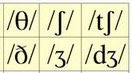
Task 1: Work on a warm-up exercise by distributing the twenty four IPA consonant cards to participants. Cover the cards and randomly say the sounds of the IPA symbols. Participants will reveal their cards as the corresponding sounds are read-aloud. Those who can show the right card will win and can enter to the second round of the game. Shuffle the cards again and read-aloud the sounds faster this time. Participants who can show their cards correctly will win and enter the third round of the game. Reshuffle the cards again and say it faster than the second time. The game will stop if the facilitator considers participants have sufficient practice to expose to the sounds.


Task 2: Can you think of any words which contain the following consonant sounds? Write one for each symbol.


Task 3: Say and pronounce the words below, focusing on the pronunciation of the consonant sounds. Remember to focus in particular on the pronunciation of final consonant sounds.

Session Six - Word Stress


000O0
Seven stress Rules
  1. When a word contains a prefix and /or suffix, the accent usually falls on or within the root word.

  2. The stress usually falls on or within the first word of a compound word.

  3. In a two-syllable word that functions as either a noun or a verb, the stress is usually on the first syllable when the word functions as a verb.

  4. When there is a double consonant within a word, the stress usually falls on the syllable that ends with the first letter of the double consonants.

  5. In multisyllabic words ending in tion, the primary stress falls on the syllable preceding the tion ending.

  6. When the vowel phoneme within the last syllable of a two-syllable word is composed of two vowel letters, that syllable is usually stressed.

  7. When there is no other clue in a two-syllable word, the stress most often falls on the first syllable.

Session Five - Six Consonants

voiceless th - thin, third, mouth, north, three,threat, health, and length

voiced th - that, there, breathe, bathe, breathes, bathes

voiceless sh - shop, shut, fish, ash, shrimp, shrine, trashed, crashed

voiced sh - rouge, garage, rouged, garaged

voiceless ch - China, church, much, rich, lunch, fetch

voiced ch - join, gin, huge, ridge, lounge, George

6/30/2008

Session Four - Name Transcription

The relationship between English sounds and spellings can be well illustrated by studying Chinese names.

The following are some of the examples:

陳李張王何趙錢周吳鄭王馬謝曹梁

Chan Lee Cheung Wong Ho Chiu Chin Chow Ng Cheung Wong Ma Tse Tso Leung

Can you transcribe the above surnames into IPA symbols?

Session Three - Vowels and Diphthongs

Circle the word which does not rhyme/ has the same vowel or diphthong sound with the word on the left?

  1. alone phone shown thrown town
  2. buys advise price stick tries
  3. clear bear beer dear fear
  4. goes chose lose shows toes
  5. knees niece peas pace trees
  6. made afraid paid played said
  7. most cost post roast toast
  8. roof boot foot shoot suit
  9. shoes choose does lose food
  10. there care hair here wear
  11. thumb come home some sum
  12. throw go know toe too
  13. weight great height late straight
  14. word bird heard lord third
  15. worse horse nurse purse reverse

Session Two - Sound Blending

Task 1:
Fill in the table with the right words:bad, bit, cut, box, bed, lot, let, lit, gun, dad, rat, red, rid, rod, rusty.


gate, bone, mute, free, file, tail, boat, due, pie, pea, bay, deep, high, foe,
dew


germ, deep, turn, term, cork, zoo, cheese, yard, farm, meat, pawn, put, scar, born, shoot


rare, beer, poor, tour, steer, share, join, loud, gown, toy


6/25/2008

Session One - An Introductory to the 44 IPA Sounds

The first lesson is a challenging lesson. How can I help the participants become confidence in learning English pronunciation? Most participants have never learnt International Phonetic Alphabet before. So I decide to focus on familiarising them with the 44 IPA symbols. I also introduce the relationship between 26 English alphabet letters and 44 IPA sounds.

44 IPA letters

24 consonants


8 paired consonants
p, f, t, k, s, th, sh, th (voiceless)
b, v,d,g, z, th, sh, th (voiced)
8 single consonants
m, n, ng, l, r, w, y (voiced) h (voiceless)

20 vowels


Long Vowels: ae, ee, ie, oe, ue
Short Vowels: a, e, i, o, u
R-Vowels: ar, er, ir, or, oo
Diphthongs: are, eer, oor, oi, ou

6/24/2008

English IPA Pronunciation Course


I am teaching a pronunciation course these days. The aim of the course is to help participants learn the International Phonetic Alphabet (IPA) sounds and their corresponding English letters. It is expected that by the end of the course participants will be able to


  • recognise the IPA symbols and their frequently associated spelling patterns so that learners can check up words in a dictionary and pronounce them accurately

  • understand the relationship between sounds and spelling patterns of words
  • differentiate the 44 phoneme sounds of English
  • identify the syllables in words and phrases
  • read words and phrases with appropriate stress, andcontinue with the learning of pronunciation independently.

The total duration of the course is twenty hours. It takes ten sessions to complete the course. I will share more with you - how I prepare for all the ten sessions of the course in the coming ten days. I will also share how the participants react to some of the learning tasks and the in-class activities I've prepared for them.

6/16/2008

A Testimonial for My Daugther School - the ICQM

I am grateful that my daughter, Carol has been studying at the International Christian Quality Music Secondary and Primary School for the past five years. I can see the difference that the school education has made on her.

Carol is tall and strong physically. But when it came to her intellectual and character development, I was really worried for her. It has been a great challenge to my family because Carol used to be a very strong-will child. There was always tension between us – mother and daughter. I could hardly make her work on anything that she did not like or did not feel comfortable with.

The tension has been easing since Carol joined the ICQM. She becomes more aware of her weaknesses and strengths. She is more willing to accept God’s love and guidance. These help her change and face her challenge more bravely. I can now see her become happier and cleverer in problem solving. I reckon it is because she has been surrounded by supportive teachers and good classmates.

Her teachers are patient, caring, and professional. I am especially impressed by her class teacher, Miss Kwok who shows her love, wisdom, and determination to help students blossom in their ways and time. She has always been supportive to their emotional needs, and constantly finds ways to help them grow intellectually and spiritually. Most importantly, she can easily discover the uniqueness of her individual students, e.g. Carol's strength and weakness, and respond to them accordingly.

I also appreciate the mental space created by the school teachers - not demanding too much from Carol when she was not ready. This helps Carol shift her negative feeling on studies to a positive mode of leisure reading and learning. This, in turn has built her confidence in learning and developed her habit in reading and self learning. In fact, the habit of reading and self-learning helps her blossom when it comes to her time - to finish the final year of her primary school study.

Apart from positive impact from the good teachers, I think Carol’s classmates have also helped her enjoy her school life and her studies. Being a mother, I really want to see Carol live a happy, healthy, and meaningful life. I also think it is important for her to have a strong faith in God and receive God’s love and respond to God's grace accordingly. I am now confident to say that her school is laying a good groundwork developing both her intelligence and character.

Thank you God, and thank you ICQM!

A Touching Story - A Unique Teacher

You may want to watch a touching story about a school teacher, Mrs Thompson and her student, Teddy Stoddard. The power point link can be found at http://www.teachermovie.com/ . You may also read the text version at Snopes.com where the origin of this fiction story is provided.

I beleive all of us can be the unique ‘ teacher' to others in life.

5/30/2008

Blogging Your Learning Experience

To make yourself learn better, you need to develop a study plan and share how you make the plan work. The plan is crucial to motivate and help you to learn and enhance your English skills in a long run. You also need it for record-tracking your learning journey. The record can help you see how you reach your learning goal so you are more aware of the responsibility for your own learning.

Blogging can help stir up your desire to learn. The desire can fade out without a support from others. Using the blog can easily gain the support. Start by sharing your experience in learning some new phrases everyday. Talk about something that impacts your daily life. Use the blog to record your thinking, this helps you express better in writing. Share the blog with your friends as much as possible.

Most importantly, no man is an island. We can't really isolated ourselves. We enjoy learning and sharing. We want to grow both intellectually and spiritually. We can't grow without learning. Learning takes a life time. Learning a new language also means appreciating some new culture and value that you may not have encountered before. Take myself as an example, I am Christian. I read Holy Bible every day. I did it ritually and didn't gain much insight until I started switching the language mode from Chinese to English. I now gain a lot more insight from the Words in the Bible. It impacts me immensely, because I can make a better reflection when memorising and mediating the Words in the second language.

5/27/2008

Playing Dual Roles: Teacher and Student

You will have a lot of fun if you can play dual roles being a teacher and a learner to enhance your English skills. The ideas below provide some tips.
  • Use audio materials to teach yourself. If possible, help yourself listen to learn before you will read to learn.
  • Make yourself answer and respond to the listening and reading tasks. So, you will engage in deep learning not the superficial learning.
  • Get into the details. Learning happens when it touches on the great details of the subject. So, read and listen to something that you are immensely interested in. Your study will also satisfy your intellectual thirst.
  • Take time to show yourself the learning materials as many times as you can. It is necessary to repeat the listening and reading. Give yourself a break if you are bored by the reading.
  • Record your own reading or speaking. You will see your own progress in the process.
  • Tell yourself that you appreciate and value your effort. Believe in yourself and your ability of learning English.

Can and Can't

I can eat, but I can't cook.
I can swim, but I can't dive.
I can run, but I can't skate.
I can jump, but I can't fall.
I can ride, but I can't drive.
I can make, but I can't create.
I can walk, but I can't fly.
I can sit, but I can't nap.
I can kick, but I can't hit.
I can take, but I can't steal.
I can close, but I can't lock.
I can hike, but I can't climb.

How about you?

Fill in the blanks.

I can eat, but I can't _______.
I can swim, but I can't ________.
I can run, but I can't ________.
I can jump, but I can't ________.
I can ride, but I can't _______.
I can make, but I can't _______.
I can walk, but I can't _______.
I can sit, but I can't _______.
I can kick, but I can't _______.
I can take, but I can't ________.
I can close, but I can't _______.
I can hike, but I can't _______.
I can ______ , but I can't ________.

5/22/2008

Reading Project - Triangle of Life

Yesterday I received an email message regarding the earthquake safety. It is known as "Triangle of Life" by Doug Copp. Read the message below. The picture below can help you better understand the article. The picture was downloaded from the link http://shehui.club.xilu.com/bbs/chinabox/newsview-950432-642104.html . You will also see the Chinese translation of the message if you follow the link.

However, the validity of the advices has been questioned by others. Read the research article you will find at the link
http://www.cert-la.com/RejoinderToDougCopp.pdf. You may also use the Google search engine to search for the related articles by typing in the key words "triangle of life".

Write your comments by comparing the two techniques: "Duck and Cover" and "Triangle of Life".
--------------------------------------------------------------------
My name is Doug Copp. I am the Rescue Chief and Disaster Manager of the American Rescue Team International (ARTI), the world's most experienced rescue team. The information in this article will save lives in an earthquake.

I have crawled inside 875 collapsed buildings, worked with rescue teams from 60 countries, founded rescue teams in several countries, and I am a member of many rescue teams from many countries. I was the United Nations expert in Disaster Mitigation (UNX051 -UNIENET)
for two years. I have worked at every major disaster in the world since 1985, except for simultaneous disasters.

In 1996 we made a film which proved my survival methodology to be correct. The Turkish Federal Government, City of Istanbul, University of Istanbul, Case Productions and ARTI cooperated to film this practical, scientific test.

We collapsed a school and a home with 20 mannequins inside. Ten mannequins did "duck and cover" and ten mannequins I used in my "triangle of life" survival method.


After the simulated earthquake collapse we crawled through the rubble and entered the building to film and document the results.

The film, in which I practiced my survival techniques under directly observable, scientific conditions, relevant to building collapse, showed there would have been zero percent survival for those doing duck and cover. There would likely have been 100 % survivability for people using my method of the "triangle of life." This film has been seen by millions of viewers on television in Turkey and the rest of Europe, and it was seen in the USA, Canada and Latin America on
the TV program Real TV.

The first building I ever crawled inside of was a school in Mexico City during the 1985 earthquake. Every child was under their desk. Every child was crushed to the thickness of their bones. They could have survived by lying down next to their desks in the aisles. It was obscene, unnecessary and I wondered why the children were not in the aisles. I didn't at the time know that the children were told to hide under something.

Simply stated, when buildings collapse, the weight of the ceilings falling upon the objects or furniture inside crushes these objects, leaving a space or void next to them. This space is what I call the "triangle of life". The larger the object, the stronger, the less it will compact. The less the object compacts, the larger the void, the greater the probability that the person who is using
this void for safety will not be injured.

The next time you watch collapsed buildings, on television, count the "triangles" you see formed. They are everywhere. It is the most common shape, you will see, in a collapsed building. They are everywhere. I trained the Fire Department of Trujillo (population 750,000) in how to survive, take care of their families, and to rescue others in earthquakes.

The chief of rescue in the Trujillo Fire Department is a professor at Trujillo University. He accompanied me everywhere. He gave personal testimony: "My name is Roberto Rosales. I am Chief of Rescue in Trujillo. When I was 11 years old, I was trapped inside of a collapsed building. My entrapment occurred during the earthquake of 1972 that killed 70,000 people. I survived in the "triangle of life" that existed next to my brother's motorcycle. My friends who got under the
bed and under desks were crushed to death ...I am the living example of the "triangle of life". My dead friends are the example of "duck and cover".

Tips from Doug Copp:


  1. Everyone who simply "ducks and covers" WHEN BUILDINGS COLLAPSE is crushed to death -- Every time, without exception. People who get under objects, like desks or cars, are
    always crush.
  2. Cats, dogs and babies all naturally often curl up in the fetal position. You should too in an earthquake. It is a natural safety/survival instinct. You can survive in a smaller void.
    Get next to an object, next to a sofa, next to a large bulky object that will compress slightly but leave a void next to it.
  3. Wooden buildings are the safest type of construction to be in during an earthquake. The reason is simple: the wood is flexible and moves with the force of the earthquake. If
    the wooden building does collapse, large survival voids are created. Also, the wooden building has less concentrated, crushing weight. Brick buildings will break into individual bricks. Bricks will cause many injuries but less squashed bodies than concrete slabs.
  4. If you are in bed during the night and an earthquake occurs, simply roll off the bed. A safe void will exist around the bed.
  5. If an earthquake happens while you are watching television and you cannot easily escape by getting out the door or window, then lie down and curl up in the fetal position next to a sofa, or large chair.
  6. Everybody who gets under a doorway when buildings collapse is killed. How? If you stand under a doorway and the door jam falls forward or backward you will be crushed by the ceiling above. If the door jam falls sideways you will be cut in half by the doorway. In either case, you will be killed!
  7. Never go to the stairs. The stairs have a different "moment of frequency" (they swing separately from the main part of the building). The stairs and remainder of the building
    continuously bump into each other until structural failure of the stairs takes place. The people who get on stairs before they fail are chopped up by the stair treads - horribly mutilated. Even if the building doesn't collapse, stay away from the stairs. The stairs are a likely part of the building to be damaged. Even if the stairs are not collapsed by the earthquake, they may collapse later when overloaded by fleeing people. They should always be checked for safety, even when the rest of the building is not damaged.
  8. Get Near the Outer Walls Of Buildings Or Outside Of Them If Possible. It is much better to be near the outside of the building rather than the interior. The farther inside you are from the outside perimeter of the building the greater the probability that your escape route will be blocked.
  9. People inside of their vehicles are crushed when the road above falls in an earthquake and crushes their vehicles; which is exactly what happened with the slabs between the decks of the Nimitz Freeway. The victims of the San Francisco earthquake all stayed inside of their vehicles. They were all killed. They could have easily survived by getting out and sitting or lying next to their vehicles, says the author. Everyone killed would have survived if they had been able to get out of their cars and sit or lie next to them. All the crushed cars had voids 3 feet high next to them, except for the cars that had columns fall directly across them.
  10. I discovered, while crawling inside of collapsed newspaper offices and other offices with a lot of paper, that paper does not compact. Large voids are found surrounding stacks of paper.

5/20/2008

Love-driven Acts in Sichuan Earthquake

Love is patient.
Love is kind.
Love always protects.
Love always trusts.
Love always hopes.
Love always perseveres.
http://news.bbc.co.uk/2/hi/asia-pacific/7407927.stm


The acts of love can easily be seen in Sichuan after the strong
China Earthquake. Kindness, patience, protection, hope, perseverance are names for the caring acts. These love-driven acts have eased the pain and lifted people's spirit.


"Love is patient, love is kind. It does not envy, it does not boast, it is not proud. It is not rude, it is not self-seeking, it is not easily angered, it keeps no record of wrongs. Love does not delight in evil but rejoices with the truth. It always protects, always trusts, always hopes, always perseveres."
(Corinthians 13:4-7)

5/14/2008

Benjamin Franklin's 13 Principles of Success

Benjamin Franklin, a seventeen year-old boy, arrived in Philadelphia, USA without a penny in 1723. At age 42, he retired, wealthy. Few men, before or since have ever been as successful as Benjamin Franklin. He gave credit for his many inventions and business successes to the list of 13 principles of success below.

  1. Temperance: Eat not dullness; drink not to elevation.
  2. Silence: Speak not but what may benefit others or yourself, avoid trifling conversation.
  3. Order: Let all your things have their places; let each part of your business have it's time.
  4. Resolution: Resolve to perform what you ought; perform without fail what you resolve.
  5. Frugality: Make no expense but to do good to others or yourself; waste nothing.
  6. Industry: Lose no time; be always employed in something useful; cut off all unnecessary actions.
  7. Sincerity: Use no harmful deceit; think innocently and justly; and if you speak, speak accordingly.
  8. Justice: wrong none by doing injuries or omitting the benefits that are your duty.
  9. Moderation: Avoid extremes; forebear resenting injuries so much as you think they deserve.
  10. Cleanliness: Tolerate no uncleanness in body, clothes or habitation.
  11. Tranquility: Be not disturbed at trifles, nor at accidents.
  12. Chastity: Be chaste in matters with the opposite sex.
  13. Humility: Imitate Jesus and Socrates.

5/09/2008

M-o-t-h-e-r Poem

Mom is the name I call you.
Oh, I wish you always stay strong and young.
The love you give me is uncountable.
How much contribution you have made on my life?
Ears and eyes are two things you train me with.
Reading Bible everyday is what makes you shine!

Thank you God for giving me the wonderful mother.
I love you, Mommy!
I wish you a very Happy Mother's Day!

social conversation1 3 1